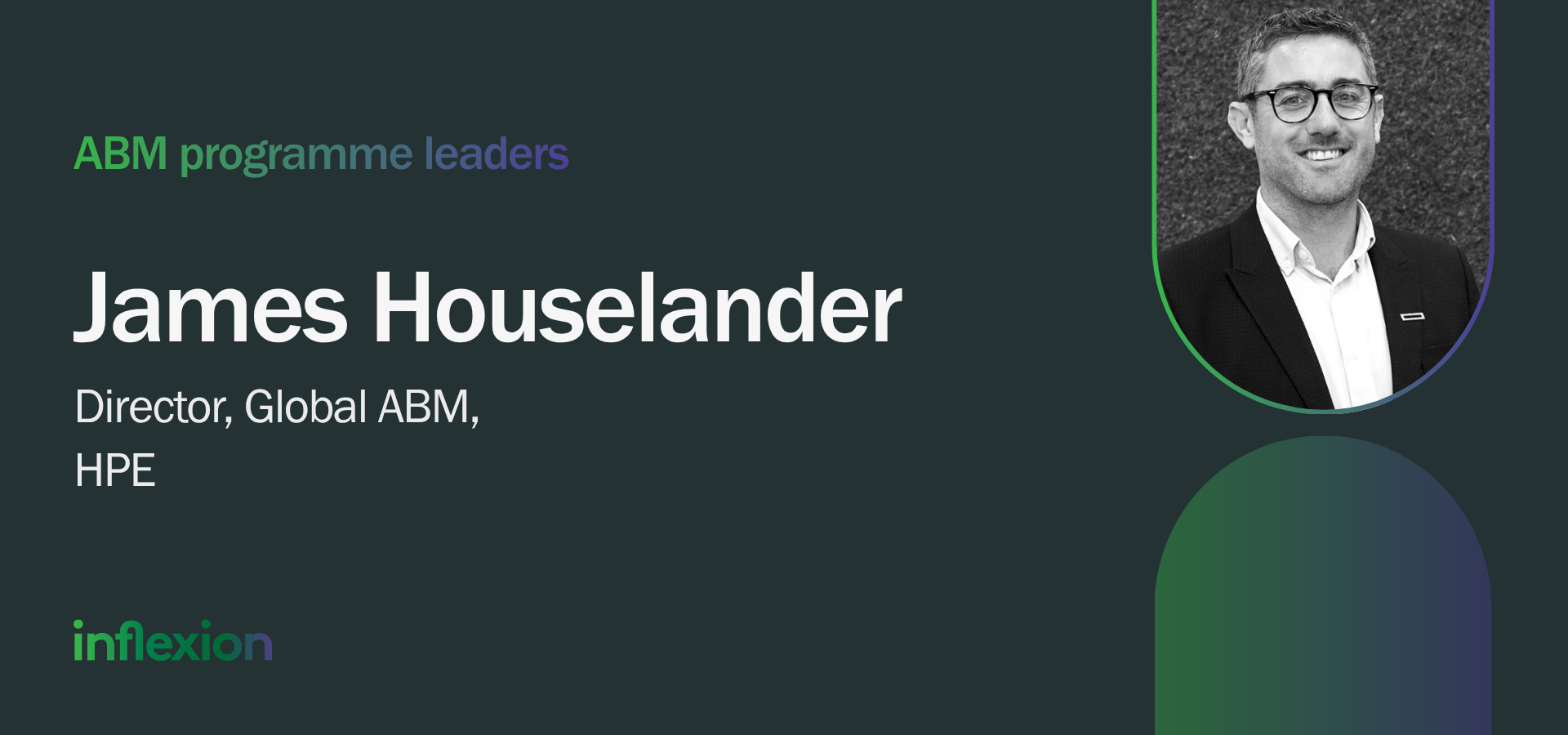
ABM Programme Leader: James Houselander, Director, Global ABM, HPE
Across our work with ABM Leadership Forum members and clients around the world, we keep having the same conversation – the difference between a good ABM programme and a great one rarely comes down to methodology. Most experienced practitioners are working from a similar playbook. What varies enormously is leadership: how programme leaders earn a seat at the table, where they choose to spend their limited attention, and how they hold their nerve when the business wants something faster or shinier than they can currently deliver.
This ABM Programme Leader interview series is designed to surface that leadership perspective directly, in the words of the people doing the job, rather than filtered through case studies or award submissions. This interview is with James Houselander, who has stood up a successful global ABM programme over the past year and has great advice to share as a result.
When ABM is making an impact, what is different about the way it is being led?
When ABM is making an impact its because of the extra degree of focus involved in aligning with the business around its most important accounts. This makes you more relevant to customers, as you coordinate across the whole marketing ecosystem for those customers to deliver a better experience.
What did it take to move ABM from a programme to a business priority?
We are still on this journey and are evangelising what ABM is and how to do it across the business, using ongoing communications to demonstrate the benefits for our customers and for HPE. This is alongside a shift in the sales organisation to focus on top customers, making target account marketing and ABM a more relevant marketing strategy.
Where do you have to make the most important strategic decisions as an ABM leader?
The first area is account selection. We spent a lot of time building a data-led model to help us make the decision objectively and in collaboration with sales. The second is deciding where to invest geographically. Where are the best opportunities for growth and how does that match the marketing resources available to support ABM? The third is about realigning to be more relevant to what the business is trying to do, be that growing with existing customers or opening up conversations with new prospects.
What has stretched you most in leading ABM, and how have you navigated it?
Understanding how best to embed an ABM strategy in our organisational context has been challenging. It requires sponsorship from the top down across sales and marketing, and engagement from the sales leaders out in the geographies, collaborating with their sales managers, who then report success back up.
But perhaps the biggest challenge lies in breaking down siloes within the business and coordinating across the marketing ecosystem. This is about change management; changing peoples’ perceptions of what marketing and ABM is, especially if they’ve done ABM before elsewhere in a different way. It all comes back to ongoing communication.
What role does ABM play in shaping business strategy and decision-making, and where has it had the most unexpected impact?
I think it’s more about aligning ABM with business strategy rather than shaping that strategy. That said, we helped to shape the way our company looked at its top accounts through the use of data on current share of wallet and total addressable market in our priority accounts. Our ABM insight packs have also helped our client executives with their annual business planning, supporting their decisions around where to focus and who to build relationships with to drive growth.
Finally, we’ve identified that we’re not always clear about the overarching message or proposition we want to take into our top accounts, so ABM has helped to accelerate getting that narrative in place, which has helped both sales and our customers.
Looking ahead, how do you see ABM evolving? What will be different?
AI will evolve how we’re doing ABM today. We’ll use agents to save time and get into market quicker, giving our team more time to spend with both sales and our customers. AI will enable us to scale our pilot and cover more accounts, supporting us through account selection, insight, messaging development, planning and execution.
What skills and capabilities will define a great ABM leader and team in the next few years?
Great ABM leaders will be business driven with a commercial mindset, understanding the market they operate in and being relevant to both sales and the customer.
They will be the conductors of the orchestra, across the whole of marketing plus sales and the business, aligning everyone for the benefit of the customer.
In terms of ABM teams, while technical marketing skills are a given, soft skills such as curiosity, business acumen, collaboration, communication and AI literacy will be crucial. The latter will help ABM-ers spend more time having business conversations that drive impact.
Read our previous ABM Programme Leader interviews with Lorraine Legros from Red Hat, Rachael Bell from NTT DATA, Helen Nicholas from Accenture Australia and Christine Law from ServiceNow.
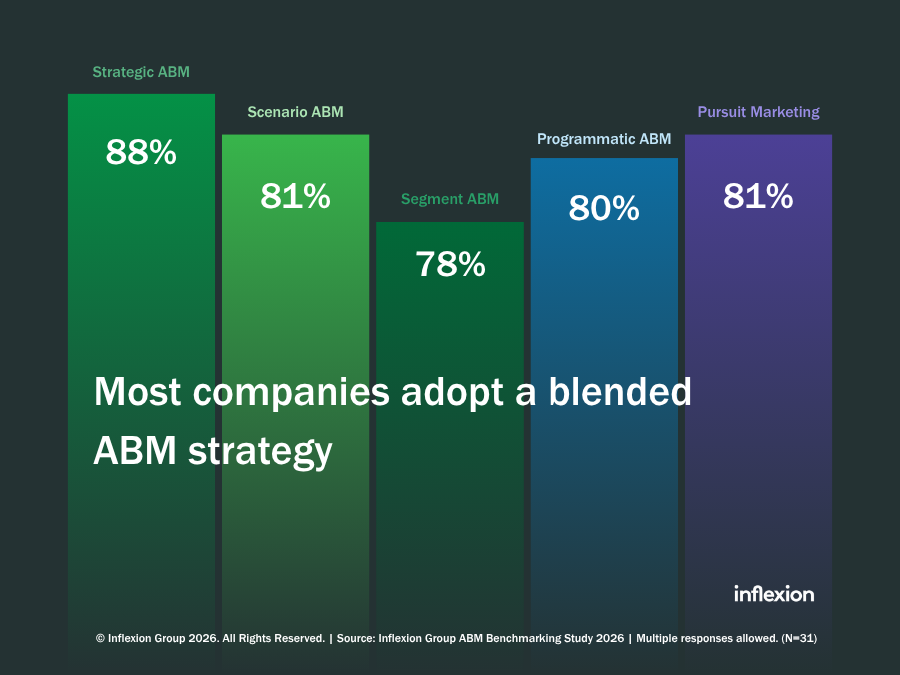
For a wider view of how account-based thinking is shaping B2B marketing, explore our 2026 ABM Benchmarking Study.