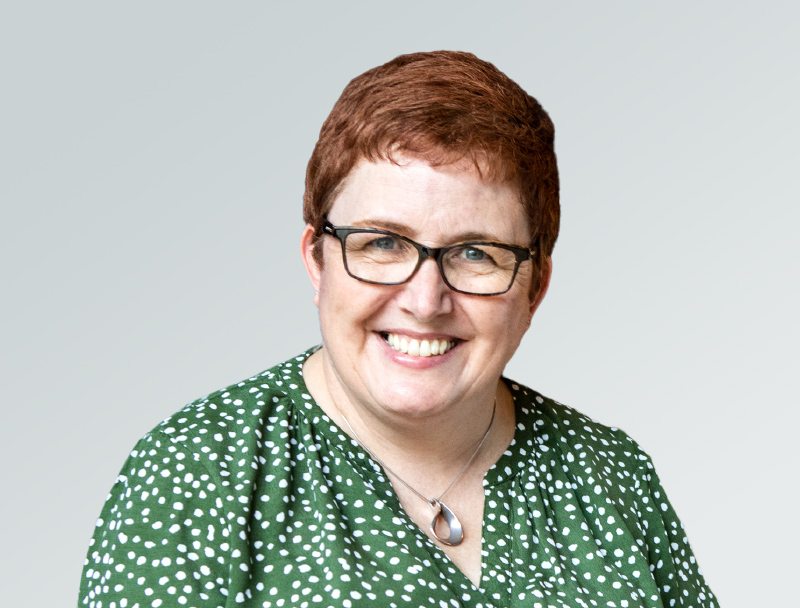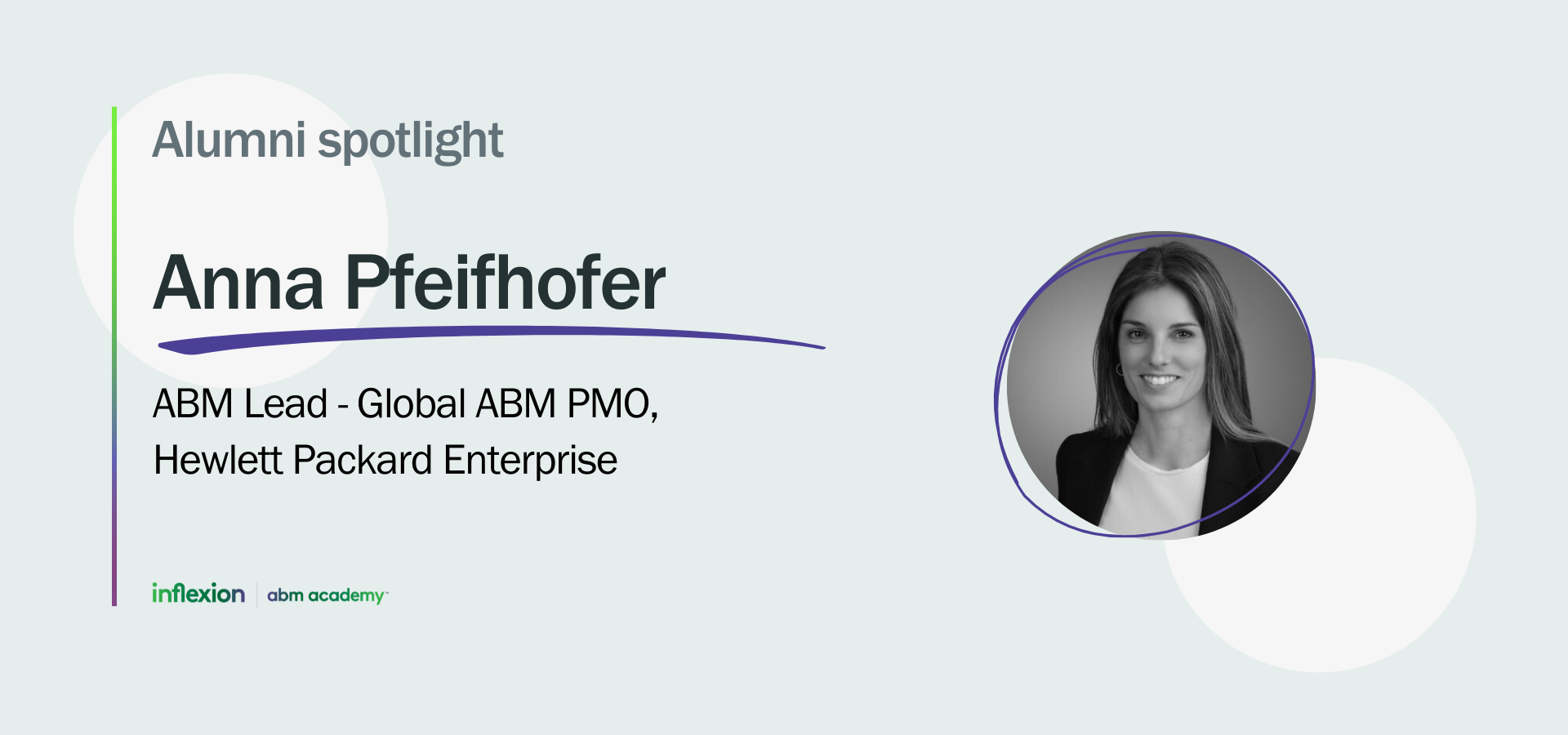
Anna Pfeifhofer is an ABM Lead, within the Global ABM PMO at Hewlett Packard Enterprise, based in Germany, with nearly a decade of experience putting ABM into practice across EMEA.
She came to ABM almost by accident — but it’s clearly where she belongs. We sat down with Anna to hear how she found her way into the discipline, what she’s learned along the way, and what she sees as the future of ABM in her organisation. If you’re looking for honest, practical insight from someone who’s lived it, you’re in the right place.
The interview:
You’re at a dinner party and someone asks what you do – how do you explain ABM?
I would say that I help my sales colleagues to better understand their customers, to build stronger relationships, and be more successful in the long term.
I do a lot of research and put on my customer glasses to see the world from their perspective. That way, I can show my colleagues more ways to connect with the customer — so the customer feels truly heard and understood.
How did you get into ABM? Was it intentional or by accident?
It was by accident, to be honest. And at the beginning when I started, I was not fully aware that the activities we were planning would be account-based marketing.
I started in a field marketing role and began doing account-specific things — tailoring website content and highlighting relevant products for a key account. Back then, nine years ago, ABM wasn’t well known to me, but it was a learning-by-doing process with great peers coaching me along the way.
What’s the biggest risk you’ve taken in your ABM career, and did it pay off?
The biggest risk was intentionally stepping away from ABM into what looked like a more traditional field marketing role at a startup. But I believed there would be opportunity and was lucky — the CMO was a big ABM advocate, and we started piloting an account-based approach targeting around 50 accounts, which opened up so many new possibilities.
It was definitely a risk, but it turned out really nicely.
What was your ‘lightbulb moment’ during the Academy course?
The most important moment was when we put the theory into practice through the case studies. We worked in groups, thinking: what would we do as a consultant? How would we target our segment or strategic account? Bringing it all together with experienced ABM-ers from different organisations and backgrounds was incredibly valuable.
That was the light bulb moment because it brought the theory into something very practical.
What’s in your ABM toolkit that you couldn’t live without – and what’s the most overrated thing everyone raves about?
AI isn’t ABM-specific, but it does make ABM easier. It can’t replace the human interaction needed for strategy and understanding client relationships, but it’s super helpful for gathering information and summarising meetings — and people are reporting significant time savings.
Most overrated? For me, its intent data. In EMEA especially, it can be misleading as having too many countries can dilute the signals and you quickly lose individual-level insight. It’s one input, but I wouldn’t rely on it too heavily; it can send you in the wrong direction. It’s not the key element for defining accounts.
Fast-forward five years – what does success look like for you?
In five years, ideally, I would like to see ABM implemented into our organisation in such a way that sales apply, or pitch, to have their account included in the ABM programme. Not us identifying accounts and convincing sales — but sales coming to us and saying, I need your support. That’s success for me.
If you could give aspiring ABM-ers one piece of advice, what would it be?
Three pieces of advice, but short ones. Keep it simple. Get started. And communicate, communicate, communicate — never get tired of repeating yourself. Get something out there, learn from it, adapt, and keep going. Everything else will work itself out.
Ready to make your own ABM transformation?
Anna’s story is a great reminder that you don’t need a perfectly planned path into ABM — sometimes the best journeys start by accident. What matters is staying curious, keeping it simple, and never stopping the conversation. We’re proud to have had Anna as part of the ABM Academy community, and we can’t wait to see what the next five years bring for her and her team.
Ready to start your own ABM journey? Explore our ABM Academy courses and find the programme that’s right for you.
Read our previous Alumni Spotlight where we chatted to Samuel Sánchez Fernández, Head of Marketing and Growth at Universal Robots – Teradyne Robotics.