Navigating B2B marketing transformation
This CMO interview series from Inflexion Group explores how complex, global B2B businesses and firms are transforming marketing, and especially their go-to-market models. We’re asking CMOs to share advice for all marketing leaders navigating transformation today.
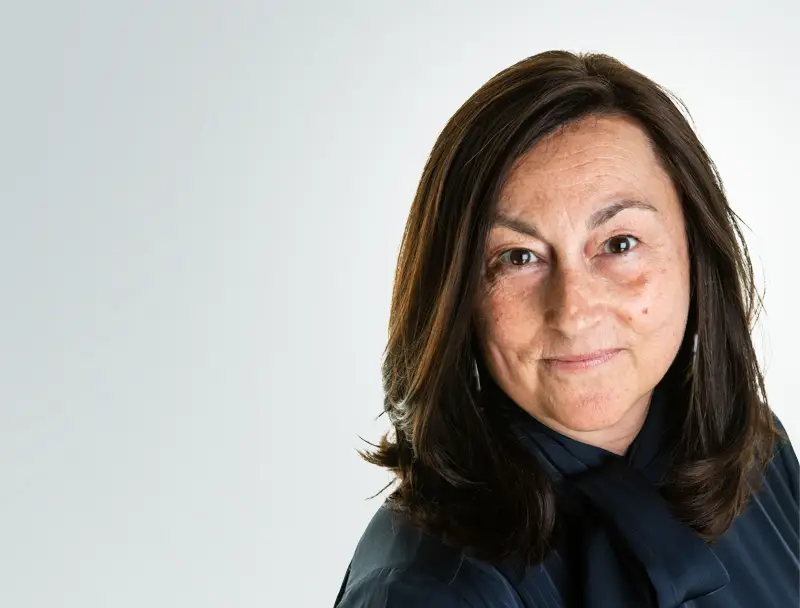
Our second interview is with Fran Wilson, CMO at Semarchy. After multiple CMO roles in the software and SaaS sector, Fran joined Semarchy in 2024 to lead and develop its global marketing organisation. She is responsible for driving demand in support of the company’s growth goals, enhancing brand awareness and helping to create exceptional customer experiences.
What’s the biggest shift you’ve seen in how your customers want to buy and what has that changed about what’s expected of you as CMO?
From what we are seeing (and I have seen trending over the past five years or so), there is a growing reliance on ‘independent buying cycles’, where prospects have largely made up to 80% of their buying decision before ever speaking to a vendor. With LLM search/AEO rapidly usurping paid digital channels (SEM), this will only continue to increase. B2B technology buying groups are becoming larger and more complex, and the need for full account multithreading has expanded.
Marketing functions are changing shape with new structures, new skills, and new ways of working. What does that transformation actually look like inside your team right now, and how are you bringing people with you?
Like most marketing organisations, we have increased our use and adoption of AI toolsets across all functions. We have seen rapid and large improvements in functional productivity, and are re-skilling team members to be AI-literate and AI-native in their approach to work.
AI is changing how you execute marketing and how your customers evaluate suppliers, sometimes before a human is even involved. What does that actually look like inside your organisation today, and where is it still messy?
As I’ve already mentioned, we are seeing this across the board in all regions. We have adopted Profound to manage and orchestrate our AEO program and are seeing a measurable shift in strong inbound intent from LLM search, converting at high rates to qualified pipeline. Our community and content strategy has had to shift accordingly given these changes.
Account-based marketing used to sit with a specialist team. Is that still true for you, or is account-based thinking changing your go-to-market model? What’s driving your approach?
ABM is still a core demand strategy for us, but it has shifted from a team approach to a cross-marketing approach. Everything we do is account-centred, from our Martech tool selection to how we are measuring engagement and conversion rates.
Many marketing leaders tell us they’re being asked to prove commercial value in board-level language, while their operating models are in flux. Does this resonate with you? How are you handling it?
This is definitely true for us, and I believe it’s true for my peers in other organisations. We have made a successful transition to new operating processes and approaches and are providing hard metrics to our Board of Directors to measure marketing’s performance and contribution to growth and profit (EBITDA). Today, Marketing is contributing over 95% of our total global pipeline.
Fast forward two or three years. What does success look like for your marketing function by then, and what has to change inside the business to get there?
Success equals the ‘Rule of 40-50 performance quarter on quarter’. This is the new benchmark for SaaS companies, so that is our target. To get there, we need to continue to drive efficiency in new pipeline creation and improve our pipeline contribution from existing customers (our expansion pipeline).
What’s one thing you’d tell a fellow CMO who’s trying to navigate this level of transformation?
Embrace the change that is underway and focus on how to continue to drive marketing transformation with AI adoption across every function.
Catch up with our previous interview CMO interview with Dr Sarah Thomas, and check out our ABM programme leader interviews as well.