Navigating B2B marketing transformation
This CMO interview series from Inflexion Group explores how complex, global B2B businesses and firms are transforming marketing, and especially their go-to-market models. We’re asking CMOs to share advice for all marketing leaders navigating transformation today.
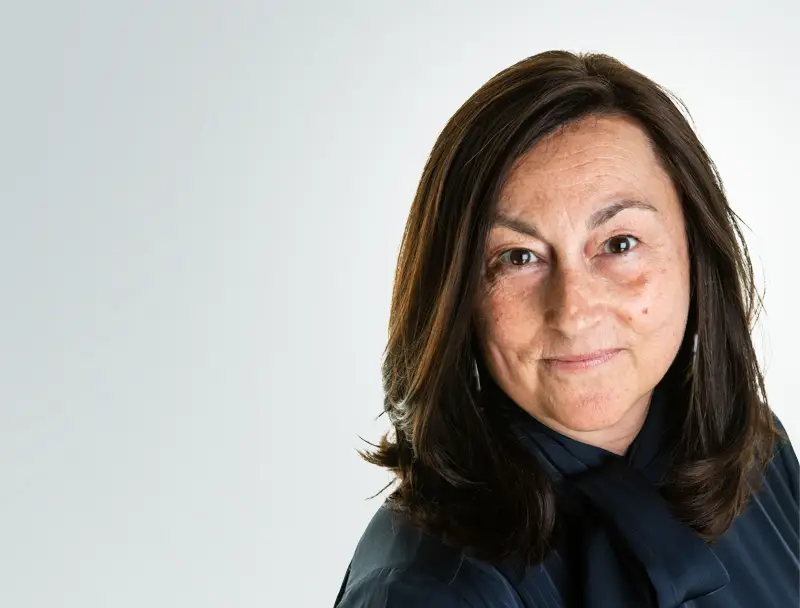
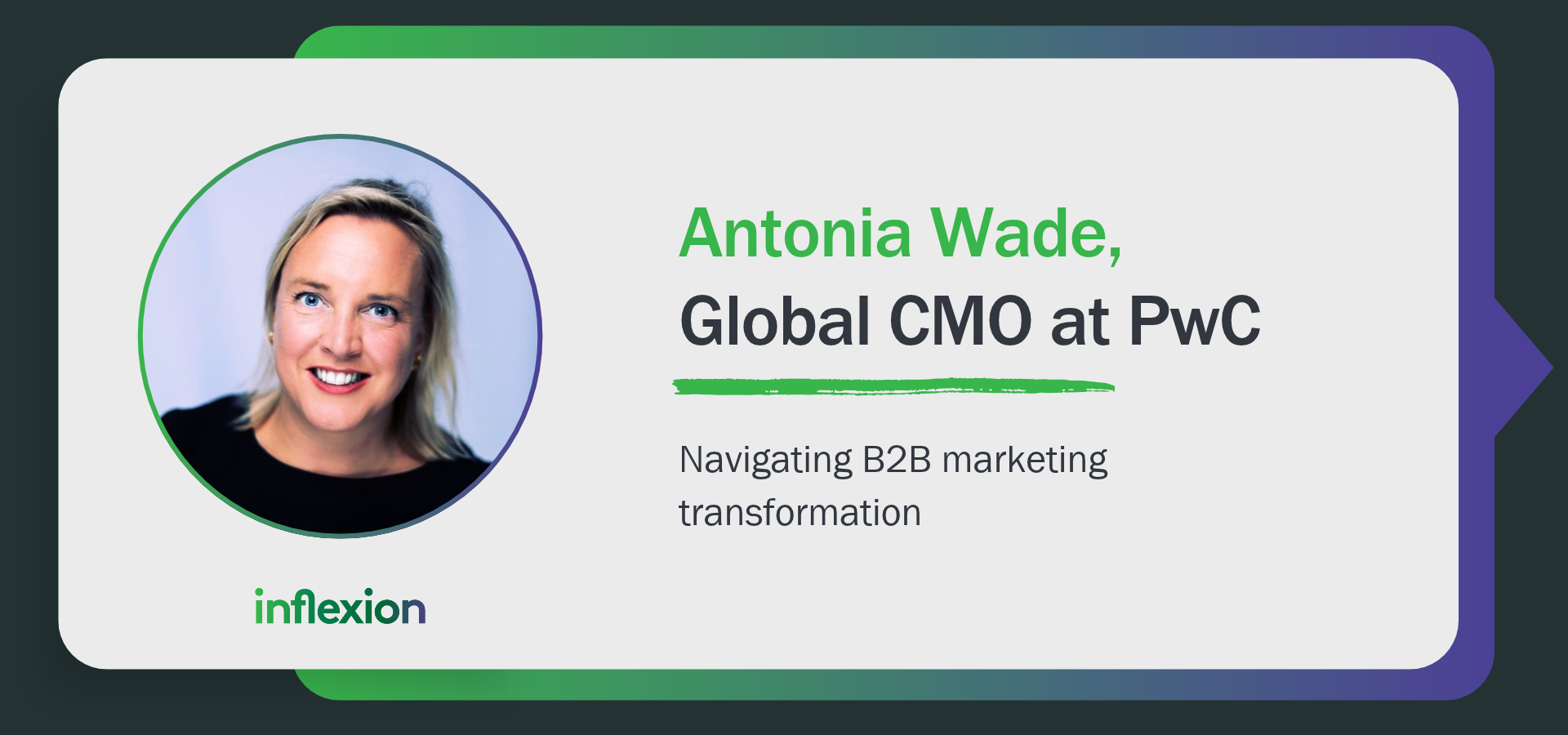
Our third interview is with Antonia Wade, Global CMO at PwC. After multiple marketing leadership roles in Capita, Thomson Reuters and Accenture, Antonia joined PwC five years ago to lead marketing as well as contribute to corporate strategy across all of PwC’s lines of business, AI and technology. She is also the author of Transforming the B2B buyer journey (Kogan Page, 2021).
What’s the biggest shift you’ve seen in how your customers want to buy and what has that changed about what’s expected of you as CMO?
As a result of the geopolitical and economic environment, we’re seeing more people involved in every buying decision. We’re also seeing technology buyers – the CIO or CTO – involved in most decisions. Both of these shifts mean that marketing is more complicated because we need to engage both the obvious buying group and more hidden buyers.
Our clients are also bringing us more nebulous problems, especially in our advisory business. Our conversations are even more strategic, and this means that thought leadership is a more important part of our marketing than ever before, and the breadth of what we’re trying to cover with it is greater.
Finally, CEOs continue to deal with what’s facing them today while trying to create value for tomorrow. Uncertainty is making that job more difficult. It means we need to be very clear about the value we can deliver today and the outcomes we can help them achieve in the future. This is a focus for both our brand storytelling and our thought leadership.
Marketing functions are changing shape with new structures, new skills, and new ways of working. What does that transformation look like inside your team right now, and how are you bringing people with you?
We have a bold vision. We’re working towards an always on, self-service marketing engine that our client teams can leverage. We’re also thinking boldly about what marketing is in future, rethinking our most important touchpoints in an agentic world. For example, we’ll move from running beautiful events to offering fantastic experiences. We’ll change the way we deliver thought leadership and case studies from static content to something designed to both give and get insight. Our ambitions are in both the ‘what’ and the ‘how’ of marketing.
Last year we put in place an agentic transformation, focused on where we could help the team and show financial value. My leadership team and their direct reports talked about where to focus our innovation budget, so it was inclusive from the start. One example was in producing photography – recognising that you still need a great photographer to prompt the agent.
AI is a great tool but it’s not amazing yet, I tell my team that agents are like junior team members, so to get the best from them you need to train and spend time with them.
This year we have organised into skills practices. Everyone has a degree of choice in where they focus and has to spend a portion of their time making other teams successful by using their skills. This is helping everyone be curious, interested and think more broadly across the function.
AI is changing how you execute marketing and how your customers evaluate suppliers, sometimes before a human is even involved. What does that look like inside your organisation today, and where is it still messy?
We are in a highly regulated sector, so I believe that our services won’t be bought without human engagement. Some of the exploratory work will of course be done by agents, but this just means that we need to create content in a different way for a different channel. Over my 20 years in marketing, I’ve seen this situation before as channels proliferated and marketing needed to optimise for them.
Account-based marketing used to sit with a specialist team. Is that still true for you, or is account-based thinking changing your go-to-market model? What’s driving your approach?
Both are true. ABM is a specialism, but the way we engage with client teams is always account-based as that’s how they work. We are an ‘account-based thinking’ organisation. And it’s this account-based thinking that is important as we put in new tools.
I’ve always believed that 1-Many ABM, or personalisation at scale, is just good B2B marketing. ABM is about more precision, and it remains a specialist approach.
Many marketing leaders tell us they’re being asked to prove commercial value in board-level language, while their operating models are in flux. Does this resonate with you? How are you handling it?
As a CMO, I’ve always had board level conversations focused on commercial results and client outcomes. How you get the job done is not that relevant – I hope they trust me to know what I’m doing! For example, we’re thinking of ourselves as client zero, and are testing our transformation so we can bring those learnings to our clients.
Fast forward two or three years. What does success look like for your marketing function by then, and what has to change inside the business to get there?
Our always-on, self-serve marketing engine will be running, which means that our marketers will be more strategic, working on higher value services and spending more time with our clients and partners. We’ll have a true business partnership rather than simply handle incoming requests for support.
So, this means we’ll be upskilling the team to focus on marketing strategy and driving transformational growth rather than producing marketing material. And with less money invested in marketing production we can spend more in distribution, including in ABM. We’ll be rethinking our highest touch client experiences.
What’s one thing you’d tell a fellow CMO who’s trying to navigate this level of transformation?
My own career started in architecture, and I learned there’s no such thing as a perfect building. You have to decide what you’re prepared to live with and what you aren’t. I think this has helped me as a marketing leader. I would suggest others challenge themselves on what is really important as they transform. What problems will you fix and what are you prepared to live with?
Catch up with our previous interview CMO interview with Fran Wilson, and find out more about this new interview series. Check out our ABM programme leader interviews as well.