Execution is being industrialised as ABM-ers look to scale. It is shifting from bespoke craft to repeatable playbooks, templates and standard processes, especially in Strategic ABM and Pursuit Marketing. Effective programmes deliver mostly tailored content through integrated high-touch and digital tactics.
Which tactics work best in ABM?
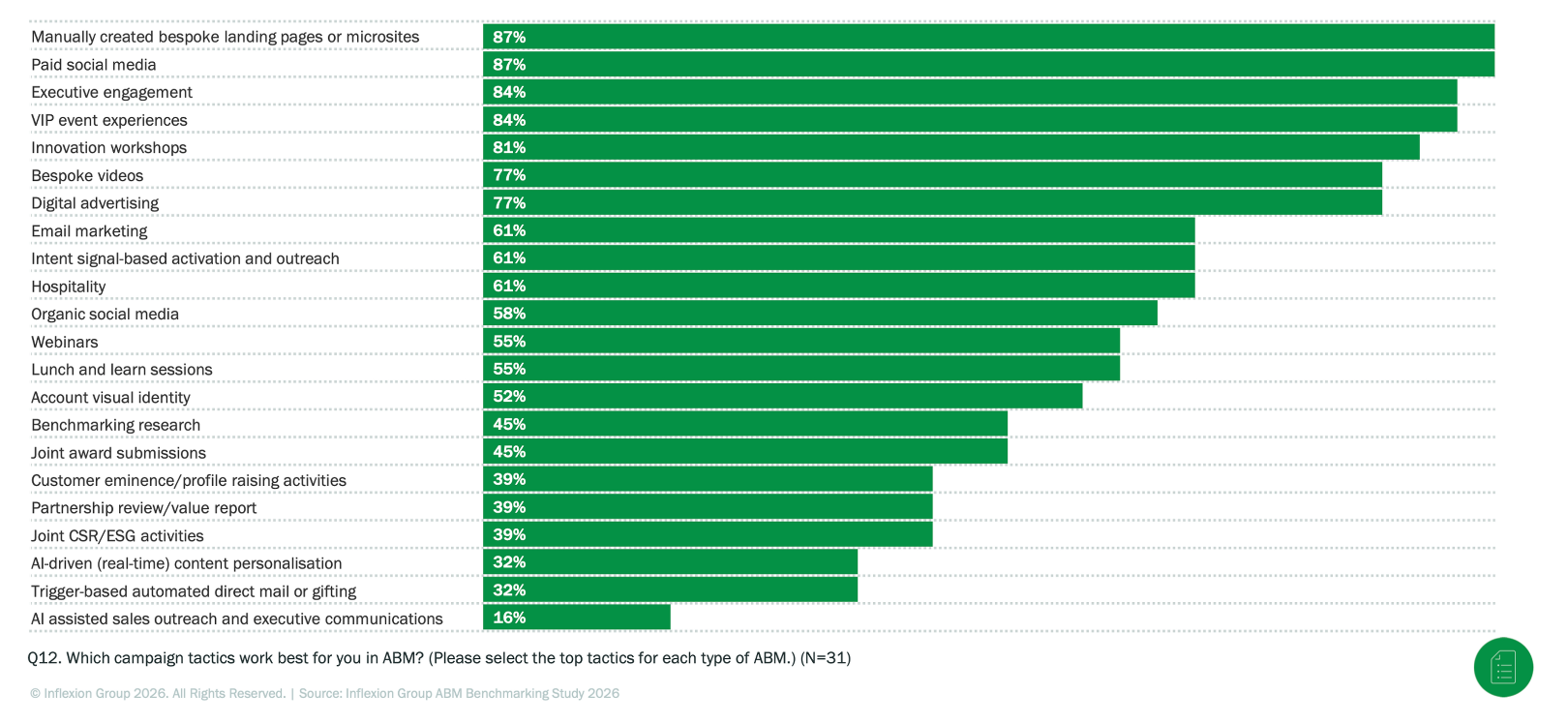
Here are some highlights from the research:
- Playbooks and templates help standardise ABM processes. Strategic ABM is the most codified, with processes often nuanced for Pursuit Marketing and Programmatic ABM.
- Tailoring content for use in ABM campaigns is the most popular approach overall, but 86% still create custom content for Strategic ABM campaigns.
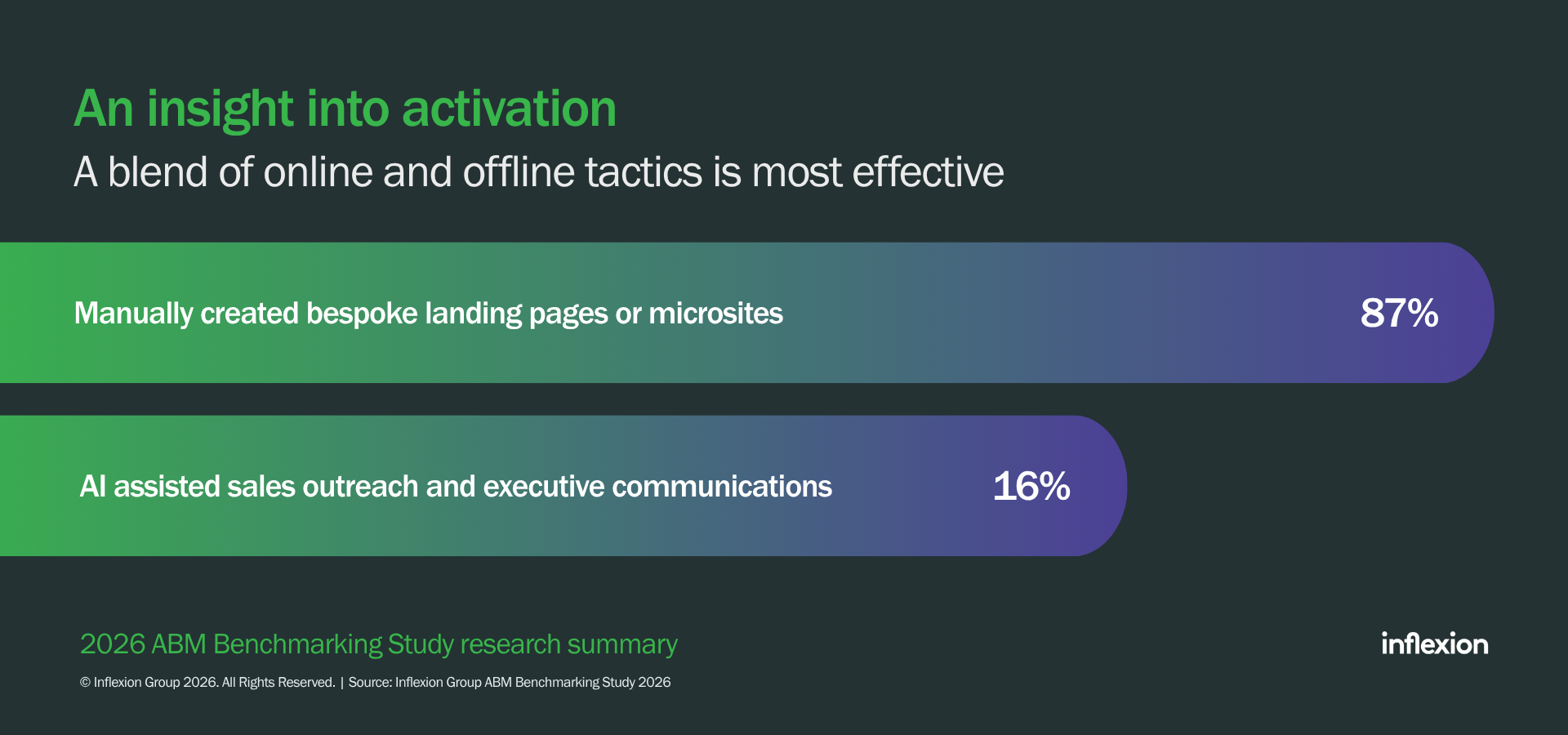
- A blend of online and offline tactics is rated most effective by programme leaders. Bespoke landing pages (87%), paid social media (87%), executive engagement (84%), VIP event experiences (84%), innovation workshops (81%), bespoke videos (77%) and digital advertising (77%) are among the tactics working best for ABM-ers.
- The top five tactics used vary by type of ABM. Bespoke, high-touch activities dominate in Strategic ABM and Pursuit Marketing; digital tactics in Programmatic ABM.
- Just under half of teams (47%) use copywriters or digital marketing agencies, while 37% use multiple regional or specialist ABM agencies. Only 10% rely on a single global specialist ABM agency, and 37% handle all activation internally.
- ABM-ers expect to lean increasingly on internal teams as agency roles evolve. Central functions remain critical, while AI is reshaping agency spend and mix decisions.
- The direction of travel is towards more selective use of ecosystem partners – for strategic, specialist and AI-enablement support.
Our findings on activation reveal how the ABM-er’s role is changing. It is increasingly about orchestrating internal teams for the benefit of the account:
“We rely on our campaign team, account teams, sales operations and the deal team. We also rely on customer marketing for executive briefing centres, executive engagement, customer references, customer experience and adoption services.”
“We have centralised teams for disciplines such as events, brand, paid media, social and content, and they support us and pay for the activities that we leverage for ABM.”
It is also becoming less reliant on external agency support:
“Our relationship with our agency is changing as AI can do much of what we relied on them for, so now it’s about using them to plug gaps, such as complex messaging.”
“Our agency partners will create hero assets that we’ll use AI agents to adapt.”
Read more about our new research in our 2026 ABM Benchmarking Study. And read our research summary on programme objectives, metrics and governance.