What are the most successful ABM programmes actually trying to achieve in 2026? Growing business with existing customers remains the number one priority.
In our new 2026 ABM Benchmarking Study, the findings on programme objectives and metrics, plus ABM governance, make for compelling reading. Here are some highlights:
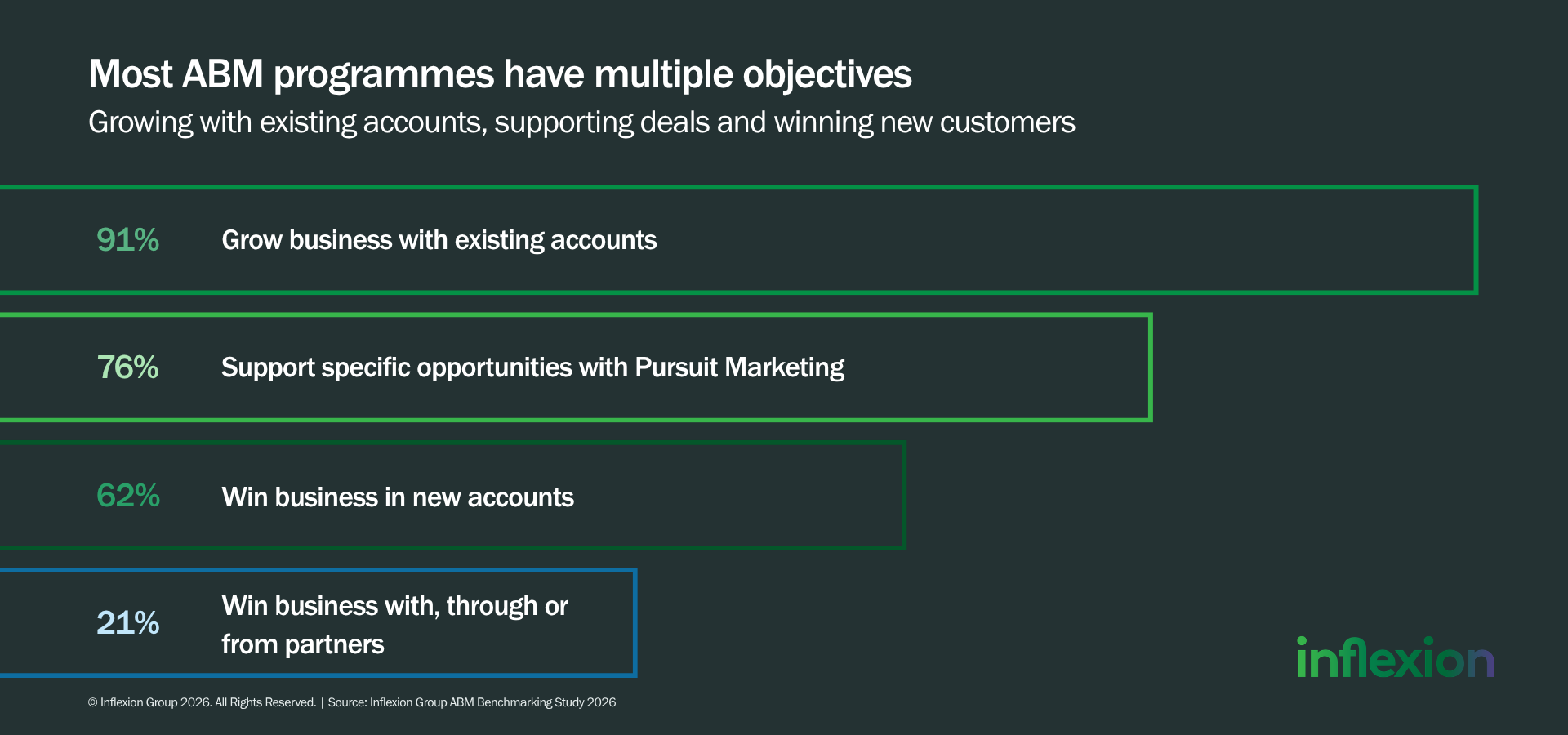
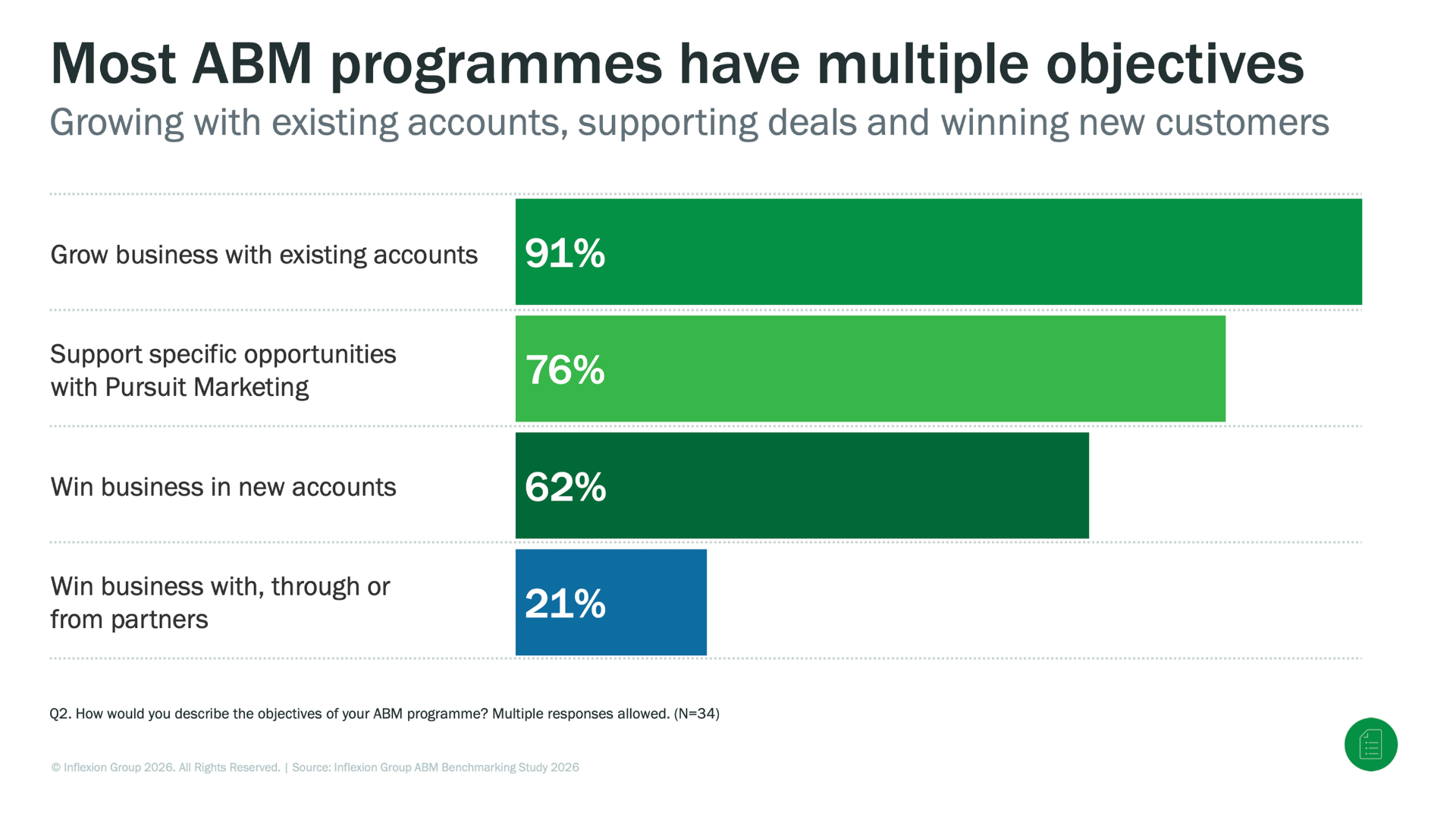
- Most ABM programmes have multiple objectives: grow existing accounts (91% of programmes), support specific deals (76%) and win new customers (62%). Programmes have expanded to cover more accounts in 2026.
- Growing existing accounts is ranked most important by 63%, followed by Pursuit Marketing (39%) and winning business in new accounts (13%).
- ABM teams are focused on having commercial impact. At the same time, their work is at the centre of reshaping and powering wider B2B marketing.
- The 3Rs remains the core framework for measurement. Revenue and relationship metrics are most common, while measuring reputation impact is harder.
- Buying group engagement and pipeline impact are key, with programme-level metrics and anecdotes fleshing out the ABM impact story.
- ABM is not always governed as a separate programme. Most have senior sponsorship for ABM but no formal programme management. CMOs partner with sales and the business to sponsor ABM for 59% of programmes. Some support teams with a CoE (38%), community (41%) and steering groups (38%), while for others ABM is ‘business as usual’ and no longer needs separate governance.
- Programme leaders actively manage risks to ABM success, using a range of approaches to mitigate resourcing, alignment, account-selection, ABM measurement and operating model challenges.
Read more about our new research from our 2026 ABM Benchmarking study.