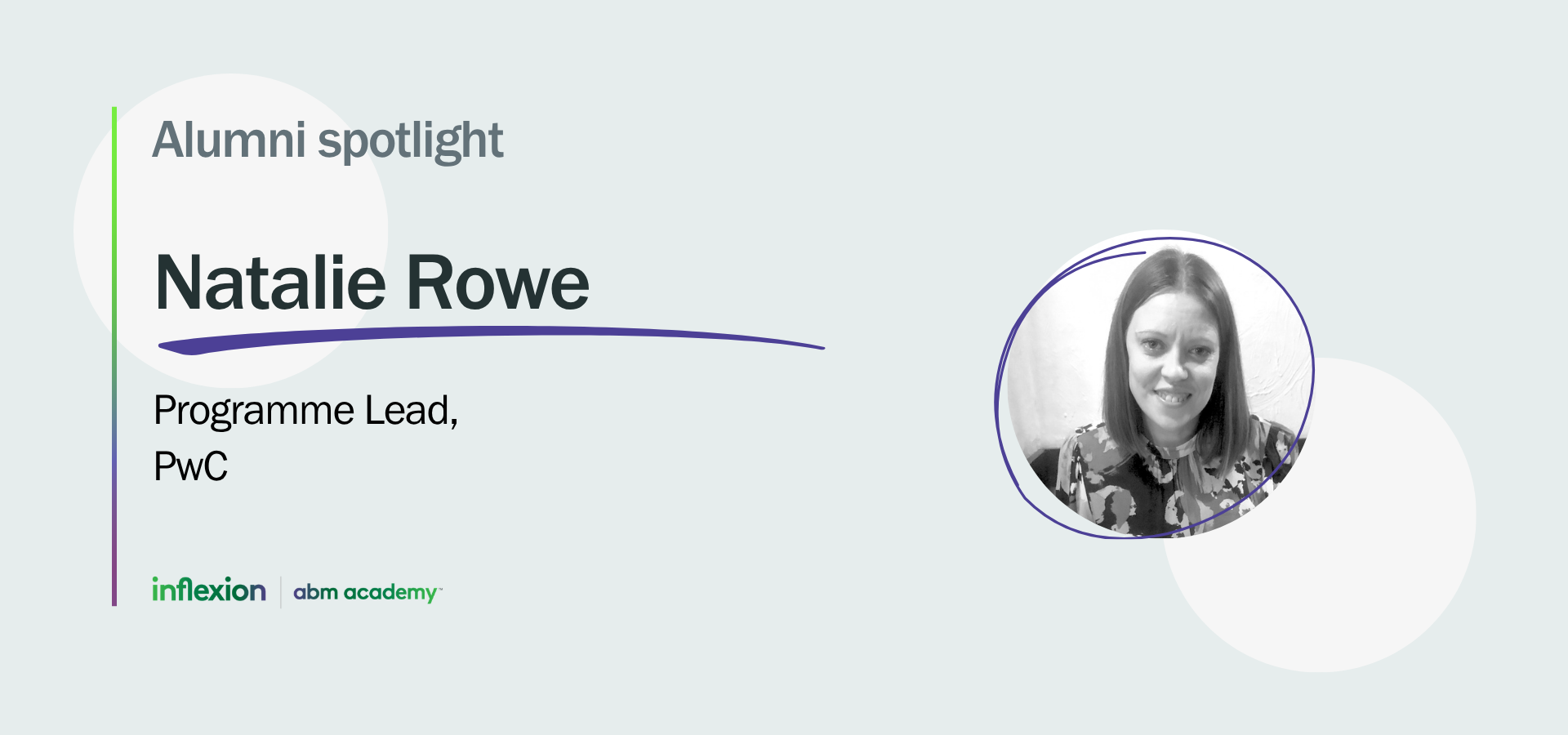
Natalie Rowe is Programme Lead at PwC, where personalisation has always sat at the heart of her client work. She found her way into ABM partly by design and partly by chance, when spare capacity and good timing lined up with a pilot programme that needed a UK representative. Since then, she has brought a brave, highly personal approach to a sector not always known for it. We asked her to share what that journey has looked like, and what she has learned along the way.
Interview
You’re at a dinner party and someone asks what you do – how do you explain ABM?
I describe ABM as starting with the individual, understanding their personal and professional interests, needs and priorities, not just their business needs. It’s about focusing on a specific client with real depth so we add value and give them the experience they want. It’s a shift away from a one-size-fits-all mass marketing approach that could never deliver that personal experience.
How did you get into ABM? Was it intentional or by accident?
A mix of intentional and accidental. I had spare capacity as another programme wound down and put my hand up for a new project. At the same time, intentionally, personalisation was already central to my existing client work. The ABM pilot happened to be starting and needed a UK rep right at that moment, a genuine right place, right time coincidence.
What’s the biggest risk you’ve taken in your ABM career, and did it pay off?
Working within a highly risk-averse, traditional accountancy and consultancy environment, the risk was persuading the team to abandon faceless, formal contact in favour of a highly personal, creative approach: a personalised book box, handwritten notes, and a chocolate bar from an ethical company, when the team’s instinct was to just email. It felt small on the surface but was a huge leap for that team.
It paid off. The CCO became highly responsive, praised the onboarding approach specifically, met with the team, and has since invited them to pitch for further work.
What was your ‘lightbulb moment’ during the Academy course?
It wasn’t a single moment, but a shift about halfway through the course. I’d started wary it might be “just another methodology” that the firm would tire of, but realised ABM is fundamentally a mindset. The real skill is deeply understanding what matters to a client and inspiring that same curiosity and creativity in others.
A member of one of the client teams now talks about how it has changed the way she approaches her accounts. She said, ‘I don’t know why I’m not doing this already’.
What’s in your ABM toolkit that you couldn’t live without, and what’s the most overrated thing everyone raves about?
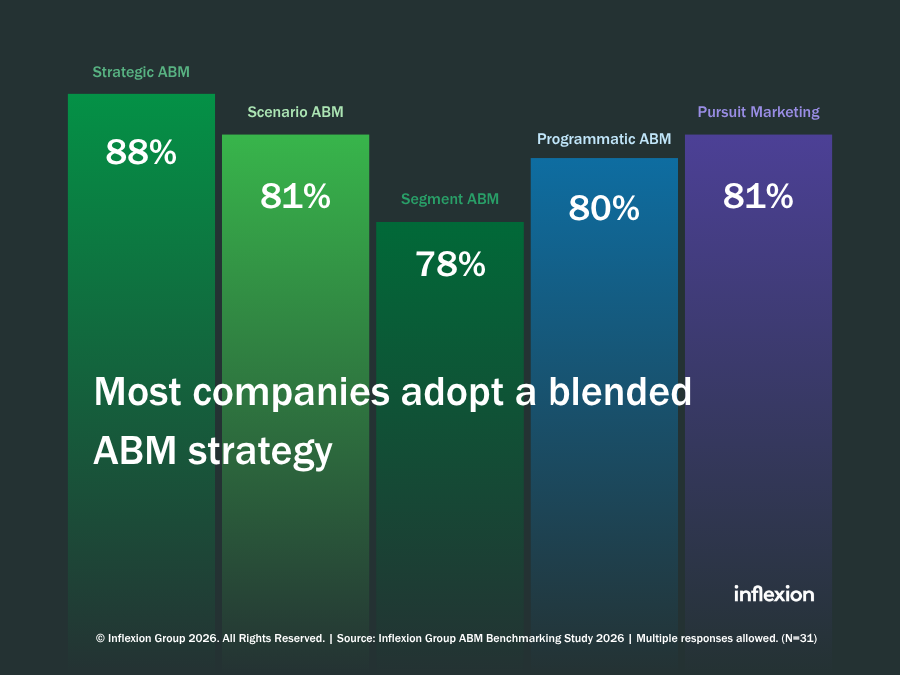
We have created seven ABM scenarios which start with a client outcome and have a pre-defined sequence of tactics associated with each one. I use this constantly to respond instantly when client teams ask ‘what could we do?’ Even with minimal context, it enables me to quickly understand the likely scenario the client team are describing and suggest relevant activities on the spot, sparking much richer, more creative conversations.
Most overrated: chasing trendy tactics, like digital magazines, just because another account used them successfully, without checking they actually fit the client’s specific scenario.
Fast-forward five years – what does success look like for you?
Scaling up significantly from the pilot accounts to potentially the top 50 clients, with senior firm buy-in moving at the same pace as client appetite and engagement. Crucially, that also means ABM moves from a specialist, ‘nice to have’ discipline reliant on me driving it, to becoming a habit and second nature, with closer integration between sales and marketing.
If you could give aspiring ABM-ers one piece of advice, what would it be?
Be brave. Don’t hold back on creativity just because you work in a conservative sector like accountancy. Clients still need to be engaged, and that requires creative thinking. ABM gives marketers the freedom to try new things, bring ideas to account teams, and not worry about doing something for the first time. That bravery is what opens doors that would otherwise stay firmly shut.
Final thoughts
Natalie’s story shows what happens when personalisation is treated as a genuine practice rather than a checkbox. In a sector built on caution, a handwritten note and a well-chosen gift did more to open a relationship than any formal pitch could, and proof that the seven-scenario toolkit she relies on serves a much simpler idea: understand the person, not just the business. Her advice to be brave is a fitting thread pulling through the whole conversation.
Ready to start your own ABM journey? Get in touch with us or explore our ABM Academy courses to find the programme that’s right for you.
Read our previous Alumni Spotlight where we chatted to Alex Powell, Marketing Lead for Institutional Banking at RBS International.