Stephanie Clark is Senior Regional Marketing Manager at Pegasystems, where she has built her ABM career on a clear commercial focus and a belief that the best marketing is deeply collaborative. She came to ABM through vertical marketing, learning to work closely with sales, build value propositions from the ground up, and translate customer challenges into programmes that actually land. Her accreditation through the ABM Academy felt, in her words, like a natural extension. We asked Stephanie to share what she has learned, what has gone wrong along the way, and the advice she’d give to anyone starting out.
Interview
You’re at a dinner party and someone asks what you do – how do you explain ABM?
Rather than marketing to lots of customers at once, I create specific programmes or campaigns for individual companies — sometimes even for individual people within a company, or for clusters of accounts with shared characteristics. And I do it in close partnership with many parts of the business beyond marketing.
How did you get into ABM? Was it intentional or by accident?
I started in traditional B2B field and campaign marketing, then launched a vertical marketing function at my previous company. I loved the way it required you to work strategically with sales — understanding customer challenges, market drivers and internal sales plays, then building value propositions, messaging and a full marcomms programme from there.
ABM accreditation felt like a natural next step from that, and honestly, I’ve never looked back. The disciplines are closely related, but ABM gave the approach a rigour and a framework I hadn’t had before.
What’s the biggest risk you’ve taken in your ABM career, and did it pay off?
I once sent 25 executives at a target bank a bespoke direct mail piece I’d spent months developing alongside the account executive and a creative agency. It had a QR code linking to a personalised landing page and video — a significant investment of time, effort and budget, and we were genuinely excited to see how it landed with these net-new contacts.
It never reached them. We later found out it had been destroyed by the mailroom as ‘prohibited marketing material’. I was honestly devastated. But it taught me something important about knowing your account — understanding the environment your campaign is landing in is as critical as the campaign itself.
What was your ‘lightbulb moment’ during the Academy course?
The measurement framework around relationships, reputation and revenue metrics. I use it every working day. It has helped me frame results in a genuinely holistic way, moving the conversation beyond campaign outputs to the broader impact ABM is having on the account relationship and the business.
What’s in your ABM toolkit that you couldn’t live without – and what’s the most overrated thing everyone raves about?
Having done ABM for a number of years, I’ve developed a workshop structure I rely on heavily — one that encourages idea sharing and collaboration and helps account teams think differently about what ABM is and what it isn’t. It’s the thing that consistently sparks the right kind of conversations.
Most overrated? The assumption that ABM means either throwing ads at a target account list built entirely from third-party intent data or reserving it exclusively for your top 15 strategic accounts. Both miss the point.
Fast-forward five years – what does success look like for you?
More stories. The ones that stay with me are the concrete, specific examples of impact — how ABM thought leadership opened up a new executive contact that sales alone hadn’t been able to reach, or how a bespoke dinner led to follow-up conversations and a new business case. Those stories are what make the work real, and I’d love to have more of them to tell.
If you could give aspiring ABM-ers one piece of advice, what would it be?
Be more commercial. At university I’ll admit I found finance and economics modules less exciting than advertising or the creative side of marketing, but if you can genuinely demonstrate how your work ties directly to business outcomes and sales objectives, that’s how you stand out. ABM is a commercial discipline as much as a creative one, and the sooner you embrace that, the more impact you’ll have.
Final thoughts
Stephanie’s story has a refreshing honesty to it — the mailroom moment is a reminder that even the most carefully crafted ABM campaigns can come unstuck, and that knowing your account means knowing its environment, not just its strategy. Her advice to be more commercial cuts through a lot of the noise around ABM: at its best, it’s a discipline that sits right at the intersection of creativity and commercial thinking, and the measurement framework she reaches for every day is evidence of that.
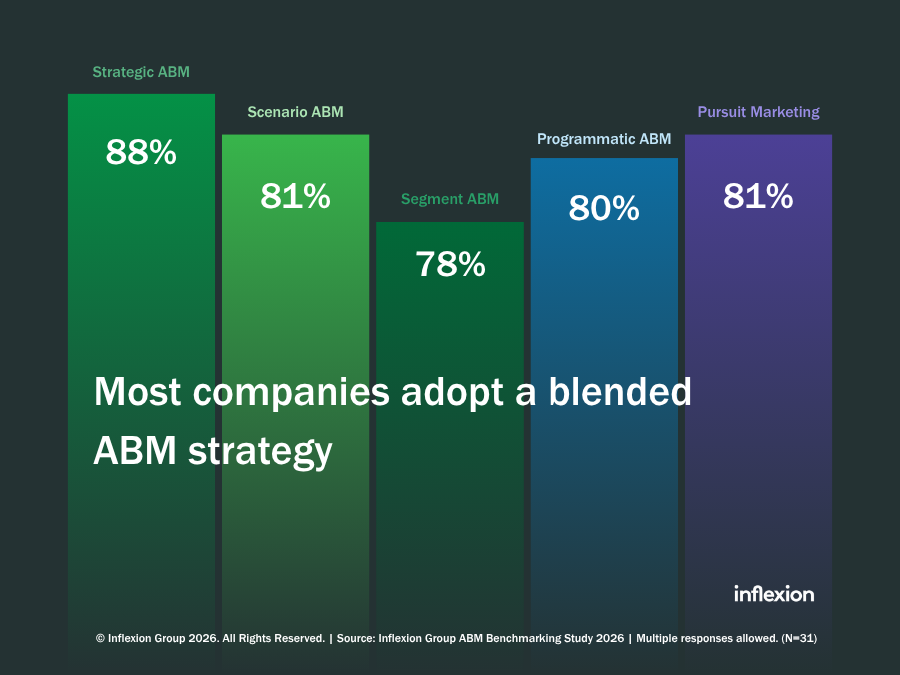
Stephanie’s focus on relationships, reputation and revenue reflects a wider shift in how ABM is measured. Our 2026 ABM Benchmarking Study shares insights from ABM practitioners worldwide on budgets, team structures, measurement and what’s driving results.
Hear from the people leading ABM at scale. Our ABM Programme Leaders series and new CMO series features in-depth conversations with experts at HPE, Red Hat and more, sharing how they’ve built and grown their programmes.
Ready to start your own ABM journey? Get in touch with us or explore our ABM Academy courses to find the programme that’s right for you.
Read our previous Alumni Spotlight, where we chatted to Lisa Ocharo, ABM Manager at Merck Group, on why campaign performance is overrated in ABM.