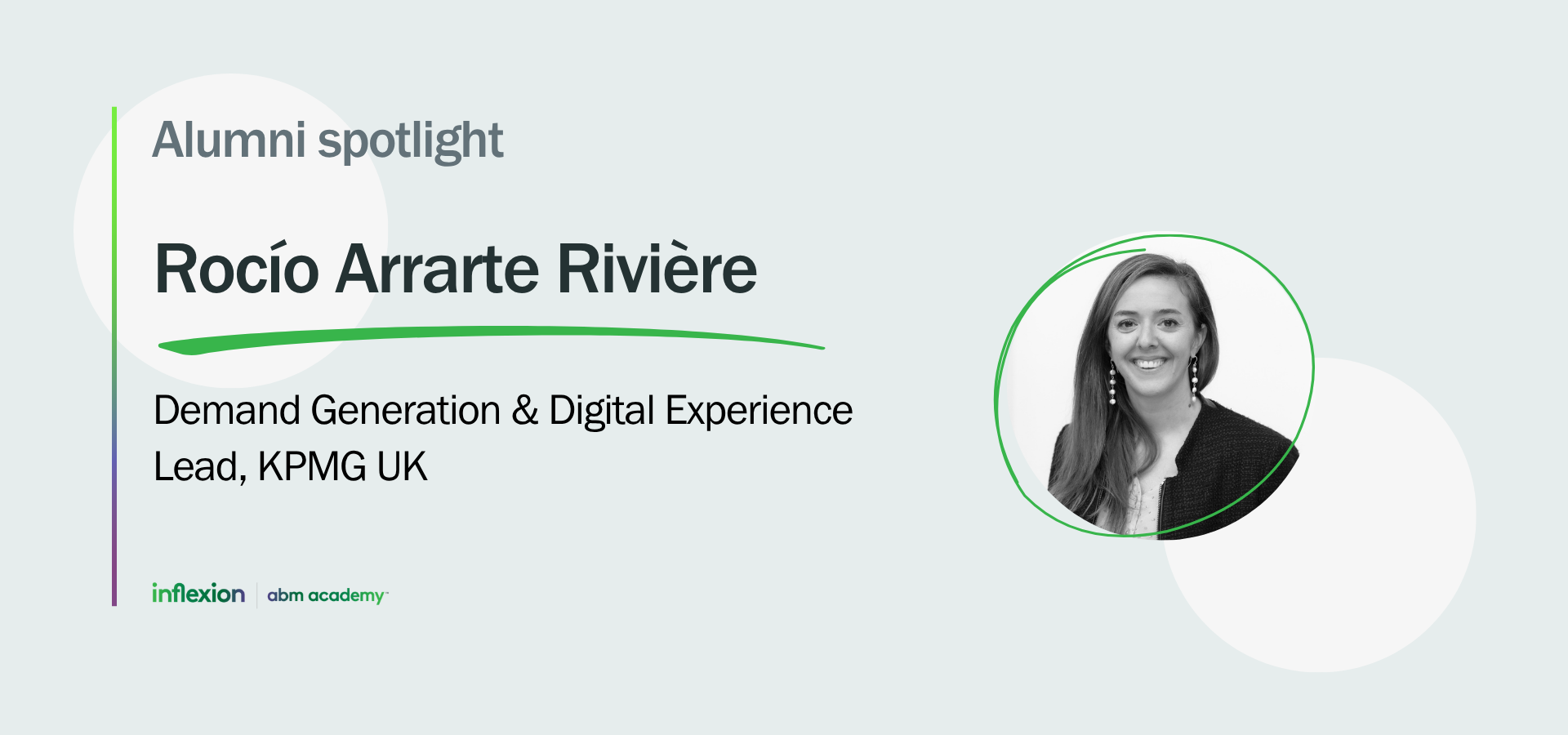
Rocío Arrarte Rivière is a Demand Generation & Digital Experience Lead at KPMG UK, where she partners with marketing and account teams to drive strategic growth and deliver standout client experiences. With a career defined by commercial curiosity and a talent for building bridges between marketing and sales, Rocío has become a passionate advocate for ABM, not as a rigid framework, but as a flexible, insight-led approach that meets accounts where they are. We sat down with her to find out how she got into ABM, the risks that paid off, and why listening will always be a key ABM skill.
Interview
You’re at a dinner party and someone asks what you do – how do you explain ABM?
I personally do more than just ABM within my role, so I would say I am a partner to the marketing team. I champion innovation and deliver strategic change that supports sustainable growth for the firm and a stronger, more consistent experience for our clients.
How did you get into ABM? Was it intentional or by accident?
At my previous company, I introduced account-based marketing (ABM) after our demand generation programmes had already captured most of our total addressable market. To unlock further growth, we needed a more tailored way to re-engage high-value accounts that were either slower to convert or less active. Moving from a broad, one-size-fits-all approach to ABM enabled tighter alignment between marketing and sales, more relevant messaging for each account, and a clearer focus on the prospects most likely to deliver impact.
What’s the biggest risk you’ve taken in your ABM career, and did it pay off?
In my previous role, I took a calculated risk by inviting a senior leader who publicly favoured a competitor to join a panel at one of our events. The personalised invite and the acknowledgement of the leader’s expertise – regardless of product favourability – helped us open the right conversations, establish a trusted non-commercial relationship initially and slowly demonstrate our value in the context of their needs, and ultimately progress the account to a won opportunity.
What was your ‘lightbulb moment’ during the Academy course?
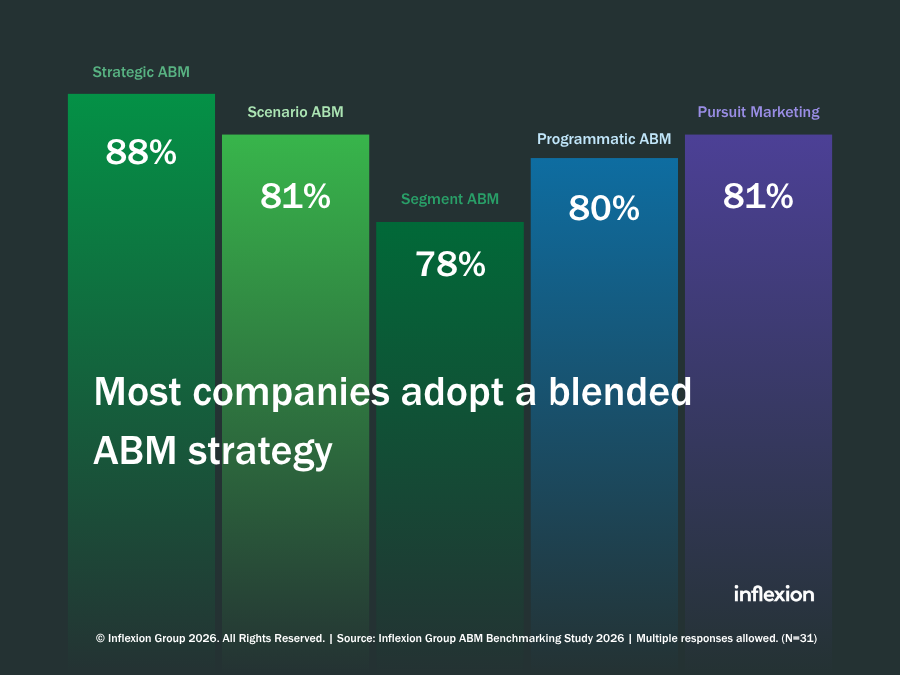
The lightbulb moment for me was the acknowledgement from the course leaders that there is a general shift away from Strategic ABM to Scenario ABM. The shift aligns fully with my marketing approach as I am outcome-driven, practical and I love optimising campaigns rather than reinventing the wheel every time. So, it was very interesting to hear how companies are shifting their approach from Strategic to Scenario ABM.
What’s in your ABM toolkit that you couldn’t live without – and what’s the most overrated thing everyone raves about?
A key strength I bring to the table is strong commercial acumen and the ability to align closely with sales — speaking a shared language and building trusted relationships to accelerate decision-making and deliver a better ABM strategy and programme.
As for an overrated skill, I would say the focus on writing value propositions. Whilst I understand it is important; I personally believe listening to the account decision makers and understanding their priorities and pressures is more powerful. Not thinking so much about what my company brings to the table, but what keeps the audience awake at night.
Fast-forward five years – what does success look like for you?
Success in five years’ time for me looks like building a mature, scalable ABM programme at KPMG — supported by a dedicated team and embedded ways of working with account teams. It would mean marketing and account leads are operating as one team around shared account plans, using insight to prioritise the right opportunities and to develop a personalised experience to our priority clients that deliver measurable impact for clients and for KPMG’s growth.
If you could give aspiring ABM-ers one piece of advice, what would it be?
My one piece of advice for aspiring ABM-ers, is to practise active listening relentlessly. The most effective ABM programmes are built on what you learn from sales, customer-facing teams, and the accounts themselves — what success looks like for them, what’s blocking progress, and what they care about right now. Turn those insights into messaging, content, and experiences that feel genuinely relevant, and you’ll earn attention faster, build stronger stakeholder relationships, and create momentum through the buying journey.
Final thoughts
Rocío’s approach to ABM is a timely reminder that the best programmes aren’t built on templates — they’re built on trust. Whether it’s inviting a competitor-aligned leader onto a panel or shifting from Strategic to Scenario ABM, Rocío consistently leads with curiosity, commercial acumen, and a willingness to meet accounts on their own terms. We’re delighted to have her as part of the ABM Academy alumni community, and we look forward to seeing the impact she builds at KPMG.
Ready to start your own ABM journey? Explore our ABM Academy courses and find the programme that’s right for you.
Read our previous Alumni Spotlight where we chatted to Caroline Jussa, EMEA Enterprise Account-Based Marketing Manager at Autodesk.