ABM hits 21 this year, and it continues to evolve. What started with strategic (or 1-1) ABM back in 2003, has morphed into a blended model over the years, with ABM-ers developing cluster (or 1-few) ABM and software providers developing programmatic (1-many) ABM, in a bid to scale across more accounts.
Today, we’re at the point where ABM is reshaping B2B marketing. Some companies are changing the remit of their field marketing teams to be account centric rather than event or campaign focused. With that, the need to scale ABM effectively continues to grow, and as the technology enabling ABM also evolves, global programme leaders are getting creative with their blended strategies.
Here’s what we’re seeing in our work at Inflexion Group
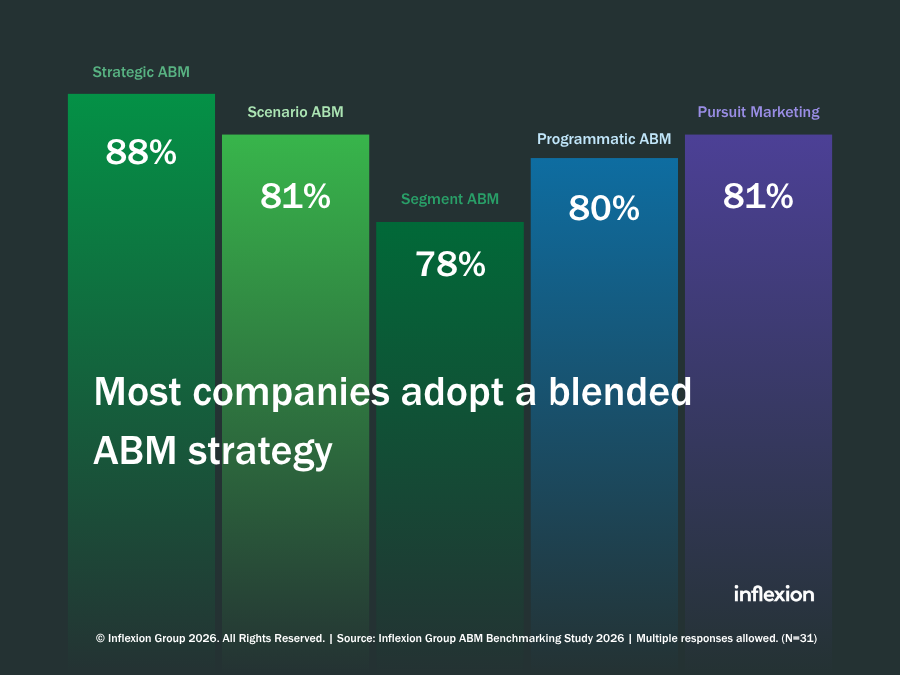
- Strategic ABM still holds pride of place for a company’s most important customers, where high touch, proactive and personalised engagement yields significant returns (provided deal sizes and annual contract values permit this type of investment).
- To extend this 1-1 approach across more accounts, some companies have introduced a lighter model, focused on driving pre-defined, specific outcomes through the customer lifecycle, such as breaking into a new buying centre or driving advocacy. We’re calling this Scenario ABM, since it involves selecting the scenario where ABM can have the most impact for the account team and focusing the 1-1 plan there for a period of time.
- Segment ABM is increasingly being used as an industry marketing approach, and ABM-ers are anchoring their plan on one or two key accounts within a segment before engaging others that share a similar context and priorities.
- Programmatic ABM is serving as both ABM at scale for lower priority accounts and an ‘always-on’ campaign approach for higher priority accounts, ensuring continuous engagement across all channels.
- Pursuit (or deal based) marketing is also becoming more widely used, focusing on winning specific opportunities and delivering deal-specific engagement for any tier of accounts.
As you move between these five types of ABM, the degree of proactivity, personalisation and investment needed per account varies, but so does your potential impact, so bear this in mind when designing the right blended strategy for your company.